

Being appointed executor often comes with one immediate concern:
“Do I really have to open a full probate case?”
In Missouri, the answer is sometimes no.
For smaller estates, the law provides a simplified process known as a Small Estate Affidavit, which allows heirs to collect and transfer assets without full court administration.
For executors and families, this can mean avoiding months of probate proceedings — but only if statutory requirements are met.
Understanding when a Small Estate Affidavit applies — and when it does not — is critical before taking action.
What Is A Small Estate Affidavit?
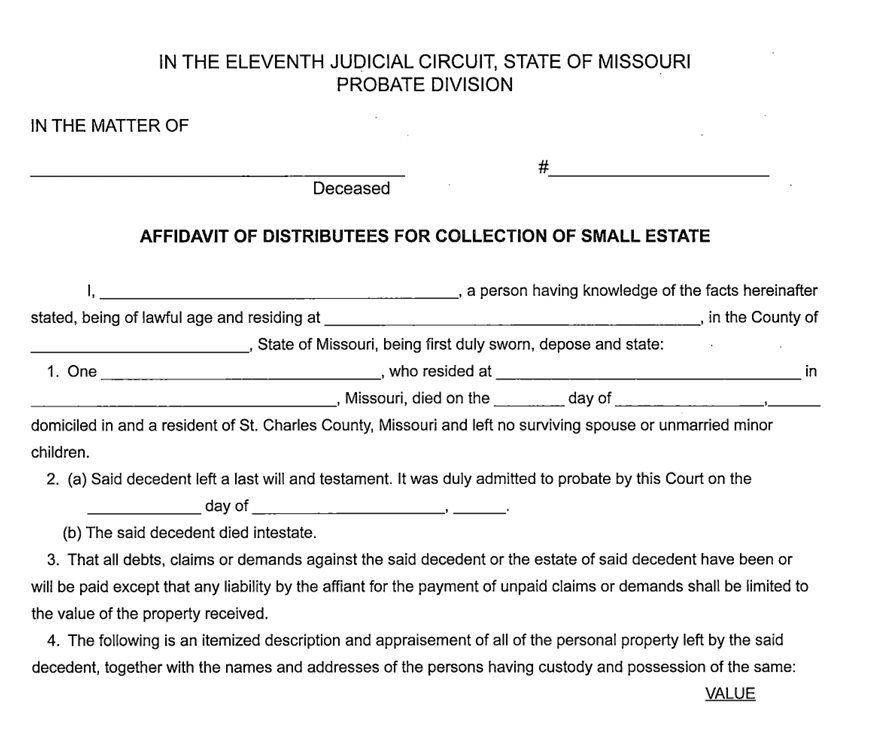
A Small Estate Affidavit is a legal document filed with the probate court that allows heirs or beneficiaries to collect estate assets without opening a full probate estate.
Instead of appointing a Personal Representative and supervising administration for months, the court authorizes asset transfer through affidavit.
This streamlined process is designed for estates that fall below Missouri’s statutory asset threshold.
If you’re unfamiliar with how probate normally works, it helps to first understand how estate settlement and probate administration function in Missouri.
Why Executors Hope To Qualify
Full probate administration can take 6–12 months or longer.
It involves:
- Court filings
- Creditor publication
- Inventory filings
- Court approvals
- Final settlement accounting
A Small Estate Affidavit bypasses most of this.
For families trying to transfer vehicles, access bank funds, or sell property quickly, avoiding full probate can significantly reduce time, cost, and administrative burden.
Missouri’s Small Estate Threshold
Missouri law allows use of a Small Estate Affidavit when the value of the probate estate — excluding exempt property — falls below the statutory cap (currently $40,000, though always confirm current thresholds).
Importantly, this calculation only includes probate assets.
Non-probate assets such as trusts, beneficiary accounts, and jointly held property are excluded.
If you’re unsure what qualifies as probate property, review the difference between probate and non-probate asset transfers.
Waiting Period Before Filing
Missouri requires a statutory waiting period before filing a Small Estate Affidavit.
Typically, at least 30 days must pass after death before submission.
This waiting period allows time to identify heirs, locate documents, and assess estate assets.
Attempting to transfer assets too early can create legal complications.
What Assets Can Be Collected With A Small Estate Affidavit?
Common assets transferred through affidavit include:
- Bank accounts
- Vehicles
- Small investment accounts
- Personal property
However, real estate transfers are more complex.
While Missouri allows real estate transfer through Small Estate Affidavit in some circumstances, title companies often impose additional requirements before insuring conveyance.
If real estate is involved, it is wise to review how property transfers are handled during estate administration.
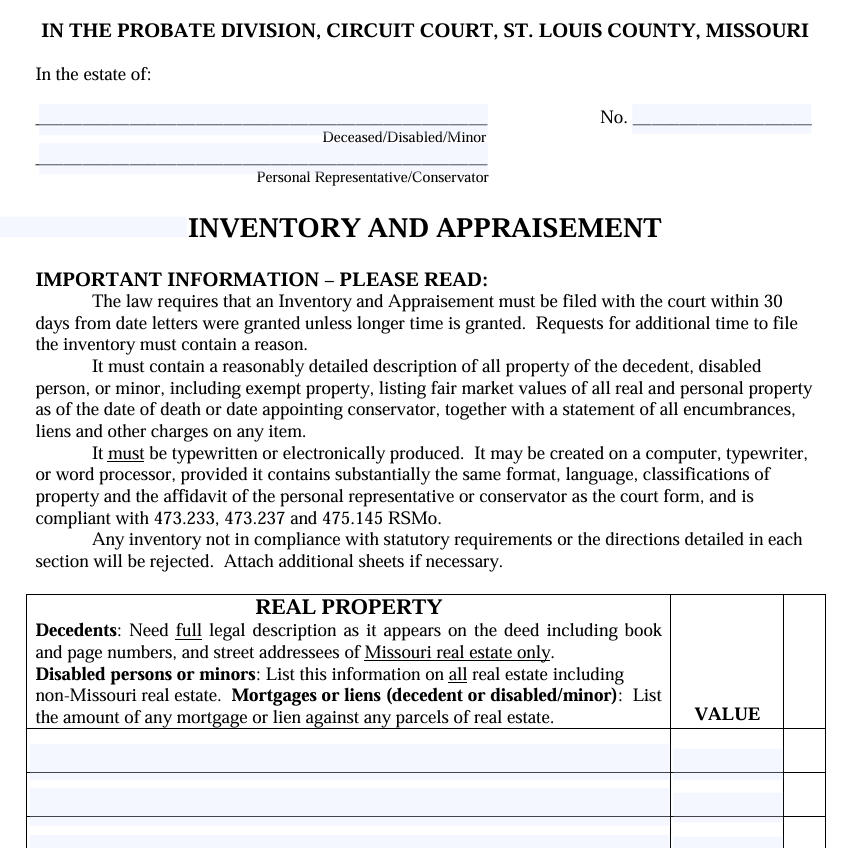
Information Required In The Affidavit
The affidavit must include detailed estate information, such as:
- Decedent’s name and date of death
- Heirs and beneficiaries
- Asset descriptions and values
- Creditor disclosures
- Funeral expense statements
Accuracy is critical.
Misstatements — even accidental — can expose the affiant to liability.
Not Sure Whether The Estate Qualifies As “Small”?
Many executors assume an estate qualifies — only to discover hidden probate assets later.
TrustFully helps Missouri families:
- Determine probate vs non-probate assets
- Evaluate Small Estate eligibility
- Prepare affidavits correctly
- Transfer assets efficiently
If you want to avoid unnecessary probate, schedule a consultation to review eligibility first.
Creditor Considerations
Even though full probate is avoided, creditor rights do not disappear.
Affiants must still disclose known debts and ensure funeral expenses and statutory claims are addressed.
Failure to handle creditors properly can result in personal liability.
Executors should understand broader fiduciary responsibilities when handling estate debts.
Distributing Assets Using The Affidavit
Once approved by the court, the affidavit authorizes institutions to release assets directly to heirs or beneficiaries.
Banks, for example, may require certified copies before releasing funds.
Vehicle titles can often be transferred through the Department of Revenue using the affidavit.
This allows families to settle smaller estates without prolonged court supervision.
When Full Probate Is Still Required
A Small Estate Affidavit cannot be used if:
- Probate assets exceed statutory limits
- Litigation is anticipated
- Creditor claims are substantial
- Estate structure is complex
In those situations, opening probate protects both the executor and beneficiaries.
If you’ve been appointed executor, review what to do immediately after death when administering a Missouri estate.
Common Mistakes Executors Make
Frequent errors include:
- Misvaluing assets
- Overlooking probate property
- Filing too early
- Ignoring creditors
- Attempting real estate transfers improperly
Even simplified probate requires procedural accuracy.
Final Thoughts
Missouri’s Small Estate Affidavit process can be an efficient tool for settling modest estates.
But qualification depends on asset structure — not just perceived value.
Executors should carefully evaluate eligibility before relying on the affidavit process.
When used properly, it can save families months of probate administration.
If you’ve been appointed executor and want to determine whether a Small Estate Affidavit can avoid full probate, TrustFully can help evaluate eligibility and prepare filings correctly.
Schedule a consultation today to simplify the estate settlement process wherever possible.
Comments are closed