

Being appointed executor of an estate in Missouri often comes with more questions than answers.
What do you do first?
Do you need probate?
How do you handle creditors?
Can you be personally liable?
Most executors are not legal or financial professionals — they are spouses, children, or family members stepping into the role during a time of grief.
This resource hub brings together the core guidance you need to understand your responsibilities and settle an estate properly under Missouri law.
Understanding The Executor’s Role
Executors — legally called Personal Representatives in Missouri — are fiduciaries.
That means you are legally required to:
- Act in the estate’s best interest
- Protect assets
- Follow court procedures
- Communicate with beneficiaries
- Avoid conflicts of interest
If you’re new to the role, start with our complete guide on what to do immediately after being appointed executor in Missouri.
Opening Probate & Court Administration
One of the executor’s first responsibilities is determining whether probate must be opened.
If probate is required, the court will issue Letters Testamentary authorizing you to act on behalf of the estate.
Probate administration includes:
- Filing the will
- Petitioning for appointment
- Publishing creditor notice
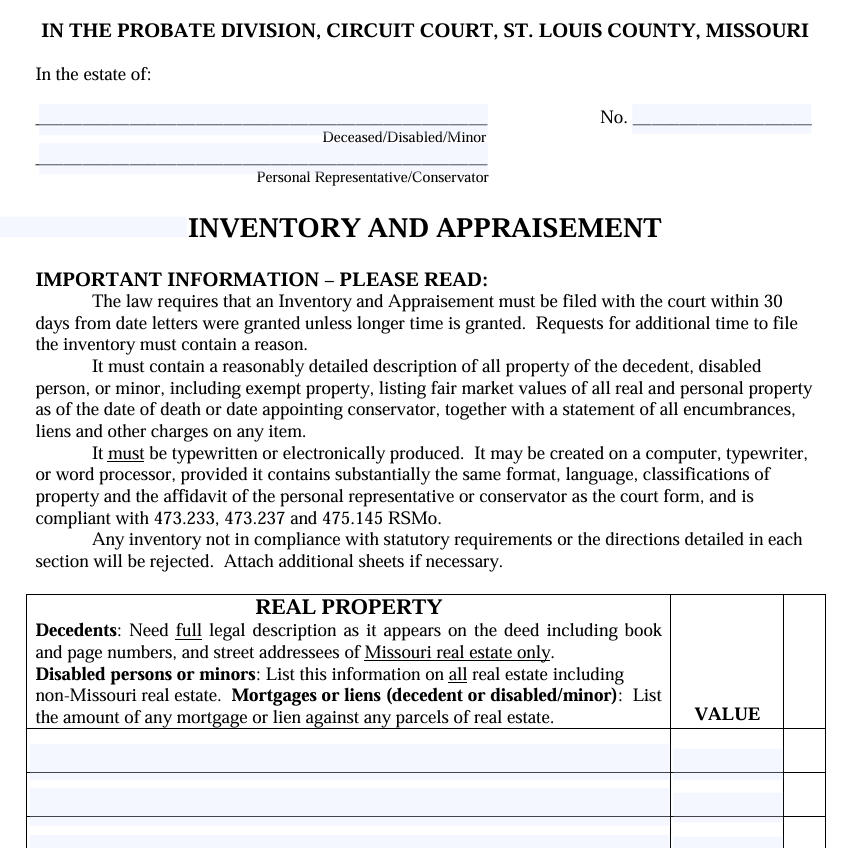
- Filing inventories
- Seeking court approvals
To understand the full process, read how estate settlement works from start to finish in Missouri.
Can Executors Avoid Full Probate?
In some situations, probate may be avoided entirely.
Missouri allows Small Estate Affidavits for qualifying estates that fall below statutory thresholds.
This allows heirs to collect assets without full court supervision.
If you’re evaluating whether probate can be bypassed, review when executors can avoid probate using a Small Estate Affidavit.
Newly Appointed Executor And Not Sure Where To Start?
You don’t have to figure this out alone.
TrustFully helps Missouri executors:
- Open probate estates
- Identify assets
- Handle creditor claims
- Prepare inventories
- Distribute inheritances
Identifying & Collecting Estate Assets
Executors must locate, secure, and value estate assets.
This process often includes:
- Reviewing financial statements
- Accessing digital accounts
- Locating insurance policies
- Identifying retirement assets
- Searching unclaimed property
Digital access has become a major component of estate administration.
If online accounts are involved, read how to handle digital assets and passwords after death.
Paying Debts & Handling Creditors
Executors must notify creditors and pay valid claims in statutory priority order.
This includes:
- Funeral expenses
- Taxes
- Secured debts
- Unsecured debts
Paying creditors incorrectly — or too early — can expose you to personal liability.
Understanding fiduciary debt handling is critical to estate administration.

Managing Real Estate In An Estate
If the decedent owned property, executors must manage and protect it.
This includes:
- Maintaining insurance
- Securing vacant homes
- Coordinating appraisals
- Listing property for sale (if necessary)
Real estate is often the largest estate asset and requires careful oversight.
Tax Responsibilities Of Executors
Executors may be responsible for filing:
- Final income tax returns
- Estate income tax returns
- Federal estate tax returns
Failure to file taxes can delay closing the estate and expose fiduciaries to liability.
Distributing Estate Assets
Executors distribute assets only after:
- Debts are paid
- Creditor periods close
- Taxes are filed
- Court approvals are obtained
If there is no will, Missouri intestacy statutes govern distribution.
To understand those rules, review what happens when someone dies without an estate plan in Missouri.
Executor Liability & Risk Exposure
Executors can face personal liability for:
- Improper distributions
- Asset mismanagement
- Failure to notify creditors
- Conflicts of interest
Understanding fiduciary risk is essential before administering an estate.
For deeper context, read how fiduciary duties impact estate administration.
When Executors Should Seek Legal Help
Executors often benefit from legal guidance when:
- Probate must be opened
- Creditor claims are complex
- Real estate must be sold
- Family disputes arise
- Tax issues are present
Legal guidance reduces liability risk and administrative burden.
Serving as executor carries legal responsibility — but you do not have to navigate the process alone.
TrustFully helps Missouri executors administer estates efficiently, comply with probate requirements, and protect themselves from liability exposure.
Comments are closed